
You’ve finally gotten stakeholders to use your project request forms instead of firing off chaotic emails. Victory! But now you’re facing a new problem: the briefs they’re submitting are barely better than those email requests.
“Need a brochure for the trade show. Make it look professional. Due next Friday.”
You’re getting the operational basics—what, when, and who—but missing the strategic insights that turn routine deliverables into high-impact work. During a recent roundtable with RoboHead power users, one marketing leader captured the challenge perfectly:
“How are you getting good creative briefs when you are asking such a variety of people for requests?”
The answer lies in empowering your stakeholders with the right framework, automated tools, and strategic support. Here is how leading creative teams are bridging the gap.
The Quality Gap
Even experienced marketers often struggle to write clear briefs, and the challenge multiplies when requests originate from:
Non-marketing business users: Lacking expertise in strategic messaging or positioning.
Junior team members: Assigned to fill out the form without broader project context.
Senior stakeholders: Clear on end goals, but unable to articulate the strategic why.
The result? Briefs that cover logistics, but starve creative teams of strategic context.
Strategy 1: Streamline Intake with Easy Request & AI Guidance
The best intake processes remove friction for non-creative stakeholders while ensuring creative teams get the details they need.
Simplify Submission with Easy Request: RoboHead’s Easy Request feature gives stakeholders a seamless, intuitive portal to initiate projects without feeling overwhelmed by complex forms. By lowering the entry barrier, you ensure requests enter a centralized, structured workflow rather than buried email chains.
Guide Strategic Thinking with Progressive Disclosure: Start with universal fields (audience, timeline, budget), then trigger tailored fields based on project type (e.g., tone and key metrics for content; competitive landscape for campaigns).
Leverage Spark Visual Assistant: When stakeholders face writer’s block or provide bare-minimum descriptions, Spark Visual Assistant helps them flesh out ideas, refine creative direction, and formulate clear, actionable prompts directly within the request process—ensuring your team gets rich context from draft one.
Strategy 2: Enforce Guardrails with RoboHead Brand Manager
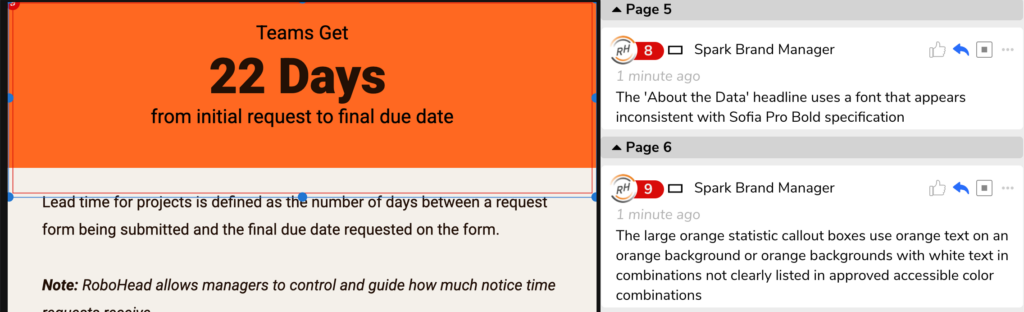
A major point of friction in brief submission is alignment with existing corporate identity. Stakeholders often request designs that veer off-brand or require heavy re-education later in the proofing process.
RoboHead’s Brand Manager solves this at the intake stage:
Centralized Assets: Connect project intake directly to pre-approved brand guidelines, logo packages, color palettes, and messaging frameworks.
Self-Service Accuracy: Stakeholders can reference and attach official brand elements while filling out the brief, eliminating guesswork about which logos or tone guidelines apply.
Reduced Friction: Creative teams spend less time policing brand compliance and more time executing on strategic goals.
Strategy 3: Deploy Business Liaisons to Uncover Deep Insights
Automation handles structure, but human strategic thinking brings the nuance. Successful teams position strategic marketers as liaisons between business requesters and creative execution teams.
As one expert noted, business liaisons “look for that juicy insight that our teams can act on and latch onto. They’re the ones we count on to find the fertile ground for creativity.”
Liaisons partner with stakeholders to uncover:
The primary differentiator setting the message apart.
Audience insights beyond basic demographics.
Competitive intelligence on what is currently working in the market.
Strategy 4: Anchor Requests with Visual Context and Annotations
When stakeholders struggle to articulate subjective preferences (“make it pop” or “make it look modern”), visual examples bridge the communication gap.
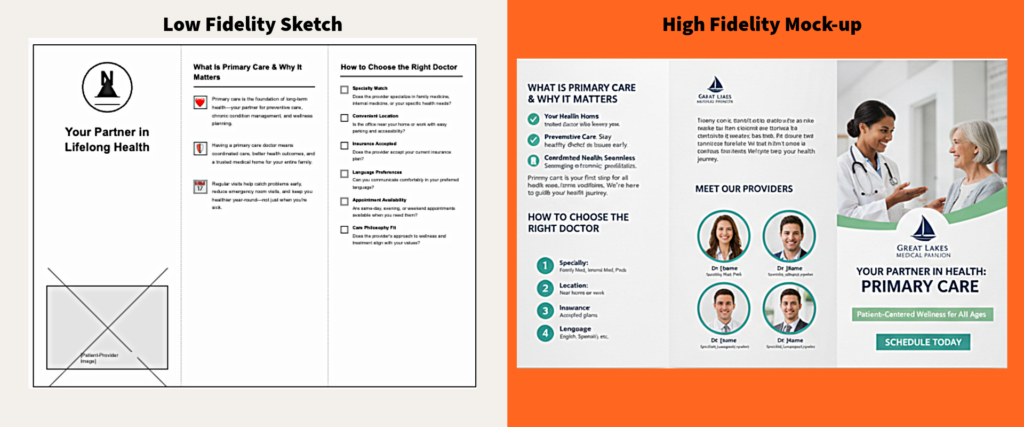
File Markup & Reference Uploads: Requesters submitting via Easy Request can attach existing assets—past brochures, competitor ads, or mood boards—and annotate directly on the files within RoboHead to point out what works, what to avoid, and where gaps exist.
Combine Spark & Visuals: Requesters can pair visual markup with Spark Visual Assistant to translate visual feedback into written strategic goals, making subjective direction clear and actionable.
Strategy 5: Train Stakeholders & Build the Business Case
Treat brief writing as a key capability rather than an administrative chore:
Provide Project-Specific Templates: Use tailored templates for web, campaign, or event requests that prompt for relevant metrics.
Highlight the ROI of Better Input: Demonstrate to stakeholders that thorough briefs lead directly to fewer revision rounds, faster approval cycles, and stronger campaign performance.
Celebrate Great Examples: Share real-world examples of well-crafted briefs alongside the final creative output to illustrate the direct link between strategic input and great results.
Making It Sustainable
Improving brief quality is an ongoing discipline. By combining strategic frameworks with modern tools like RoboHead’s Easy Request, Spark Visual Assistant, and Brand Manager, you eliminate intake bottlenecks and turn project requests into launchpads for exceptional creative work.
Auditing your current request form is a great first step—pick one area to enhance today, and watch your creative outcomes compound over time.
Take Your Creative Briefs to the Next Level
Want to dive deeper into how top-performing marketing and creative teams are reinventing their intake process?
👉 Read the Benchmark Report: The New Creative Brief to discover data-backed insights, actionable frameworks, and strategies to set every project up for success from day one.