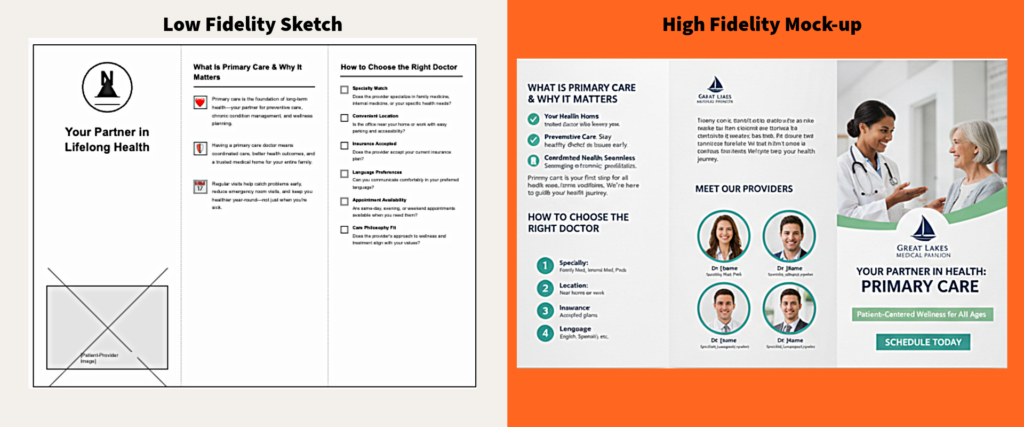
Every creative director has lived this moment: a request comes in, the brief is thin on visual direction, and the first round of work misses the mark anyway — not because the designer did anything wrong, but because nobody had actually agreed on what “on-brand” looked like for this particular ask. Three rounds and two weeks later, you land somewhere close to what the stakeholder wanted in the first place.
That gap — between a written brief and a shared visual understanding — is one of the most expensive, least visible costs in creative production. It doesn’t show up as a single bottleneck you can point to. It shows up as revision cycles, redundant reviews, and the slow erosion of a timeline that looked fine on the project plan.
RoboHead Spark Visual Assistant is built to close that gap before it opens.
What Spark Visual Assistant Does
Spark Visual Assistant generates on-brand mockups and sketches directly inside a RoboHead request or project — no separate tool, no exporting a brief into another app and hoping the context survives the trip. A creative lead or requester can generate visual direction as part of the intake process itself, so the team isn’t aligning on a mockup after the first draft. They’re aligning before any billable design hours are spent.
Because it runs on your brand standards — the same guidelines your team already maintains — the mockups it generates aren’t generic AI output. They reflect your color system, typography, and layout conventions from the first sketch.
Give people a starting point they can’t get wrong
Spark Visual Assistant generates on-brand mockups and sketches right inside RoboHead—so instead of a stakeholder going rogue with a blank canvas, they’ve got a real starting point that’s already dialed in.
What that actually buys you:
- Guardrails, not gatekeeping. People who need something visual, fast, get a way to make it inside your system—not a reason to leave it.
- Briefs that actually brief. A generated visual at intake beats three paragraphs trying to describe a vibe. Creative teams start from direction, not from guesswork.
- Fewer rounds, faster launches. When everyone’s aligned before the first real draft, you skip the revision loop where most projects lose their timeline.
Why This Matters for Creative Ops
If you run creative operations, you already know where the time actually goes. It’s rarely the design work itself — it’s the setup, the clarification loops, and the rounds of feedback that happen because two people had different mental pictures of the same brief.
Spark Visual Assistant attacks that problem at the source:
Better briefs, earlier. Visual direction becomes part of the request, not an afterthought discovered in round one of review.
Fewer iteration cycles. When a stakeholder and a designer are looking at the same starting point, disagreement moves from “this isn’t what I meant” to genuine creative feedback — a faster and more productive conversation.
Faster time to final. Every round of revision avoided is time back in the schedule, which matters most when your team is already stretched across more requests than headcount.
Built On Your Brand, Not a Generic Model
A common hesitation with AI-generated creative work is the fear of off-brand output flooding the pipeline. Spark Visual Assistant is designed around the opposite assumption: your brand guidelines are the input, not an afterthought. The system applies the rules your team has already defined, so what comes back is a starting point your designers can actually build from — not something they have to correct before they can use it.
That distinction matters. This isn’t a tool that replaces creative judgment. It’s a tool that gives creative judgment something better to react to than a blank page or a paragraph of description.
Where It Fits in Your Workflow
Spark Visual Assistant works alongside the rest of RoboHead Spark’s AI capabilities, including Spark Reviewers: Brand Compliance, which checks finished deliverables against the same brand standards before they reach a stakeholder. Together, they address both ends of the production timeline: alignment at the start, and compliance at the finish — with less manual work carrying the middle.
For teams juggling constant creative requests with limited capacity, that’s not a nice-to-have. It’s hours back, every week, across every project.
Ready to see it in action? Schedule a walkthrough to see how Spark Visual Assistant fits into your team’s workflow.